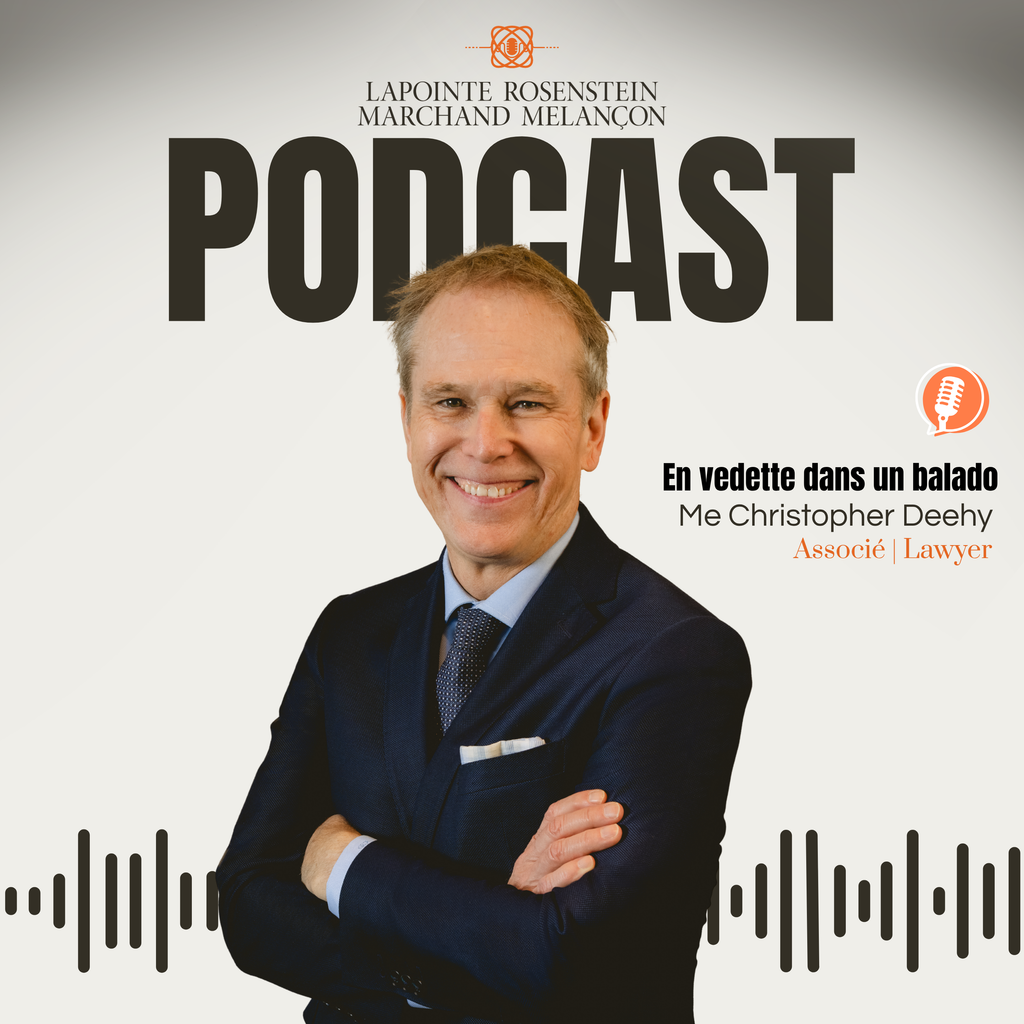
Christopher Deehy, Partner and Labour & Employment Lawyer at LRMM, recently appeared on the ABA Labor and Employment Law Podcast episode “Labour” with a “U”: Canadian vs. United States Labor Law, sharing insights on the distinctions between Canadian and American labour law.
In the episode, Christopher shares insights on the key differences between Canadian and U.S. labour and employment law and discusses the challenges employers face when operating across borders.
Thinking about expanding your business into Canada or Québec? Before crossing the border, tune in to this episode to explore the key employment and labour law considerations that can impact your business.
🎧 Listen to the episode here
Questions about navigating labour and employment issues in Canada or Québec? Christopher Deehy would be pleased to discuss your organization’s unique circumstances.

In October 2023, the Government of Quebec adopted An Act to protect consumers from planned obsolescence and to promote the durability, repairability and maintenance of goods (Bill 29), which amended the Consumer Protection Act to expand the “warranty of good working order” in respect of select consumer goods.
Although the warranty of good working order (which is more specific than the general warranty of quality) previously applied to certain used automobiles and vehicles Bill 29 extends its protection to certain categories of household appliances and electronic goods. This reflects broader efforts by the Government to promote the durability and quality of consumer products, recognizing that consumers who spend hundreds or thousands of dollars on these goods should be able to expect them to be durable and of good quality.
- Warranty of Good Working Order
As of October 5, 2026, the warranty of good working order will apply to the sale or long-term lease of certain goods, and takes effect upon the delivery of the goods. Namely, that warranty applies for:
- 6 years in the case of ranges, refrigerators, freezers, air conditioners, and heat pumps;
- 5 years in the case of dishwashers, washing machines, and dryers;
- 4 years in the case of television sets; and
- 3 years in the case of desktop and laptop computers, electronic tablets, cellular phones, and video game consoles.
If the goods malfunction during the warranty period, the consumer may contact the merchant or the manufacturer, or both, to have the goods repaired free of charge. It is important to note that the warranty also applies to subsequent purchasers of the goods, meaning that the original purchaser does not need to be the person making a warranty claim.
Merchants and manufacturers must assume the cost of repairs, including parts, labour and reasonable transportation or shipping costs. However, the warranty does not cover normal maintenance, related replacement parts, or damage caused by misuse by the consumer.
- Mandatory Disclosures
Manufacturers must clearly and intelligibly disclose online the duration of any applicable warranty of good working order including, in particular, before any distance sale (including any online sale) is consummated.
Moreover, merchants must clearly display the warranty period near the advertised price of the goods or, in the case of long-term leases, near the retail value.
Following the sale or the long-term lease of the covered goods, the merchant must also provide the consumer with information relating to the warranty, in the manner prescribed by regulation. The final amendments to the regulations respecting the Consumer Protection Act do not currently specify the manner or conditions applicable to this disclosure.
- Special Disclosure Prior to Offer of Additional Warranty
Merchants should also be aware of the specific mandatory notice that must be provided to consumers before offering an additional warranty for goods covered by the warranty of good working order:
In the event of malfunction of the goods during the warranty, contact the manufacturer and/or the merchant. They are required to repair the goods free of charge
| Goods | Duration of the legal warranty of good working order |
| Range – Refrigerator – Freezer – Air conditioner – Heat Pump | 6 years |
| Washing machine – Dryer - Dishwasher | 5 years |
| Television set | 4 years |
| Desktop or laptop computer – Video game console – Cellular telephone – Electronic pad | 3 years |
Other warranties are also granted by that Act free of charge. They allow you, among other things, to require that the goods be durable in normal use for a reasonable length of time (sections 37 and 38 of the Act). They may apply during and after the expiry of the legal warranty of good working order.
For more information on the warranties, go to the website of the Office de la protection du consommateur at Québec.ca/garanties-consommateur.
- Next Steps
As October 5, 2026 approaches, merchants and manufacturers must prepare to comply with their new obligations relating to the warranty of good working order and ensure that they are prepared to handle such warranty claims and repairs.
For further information, please feel free to contact one of our team members, who will be pleased to advise you.
The contents of this newsletter are for information purposes only and should not be construed or relied upon as legal advice.
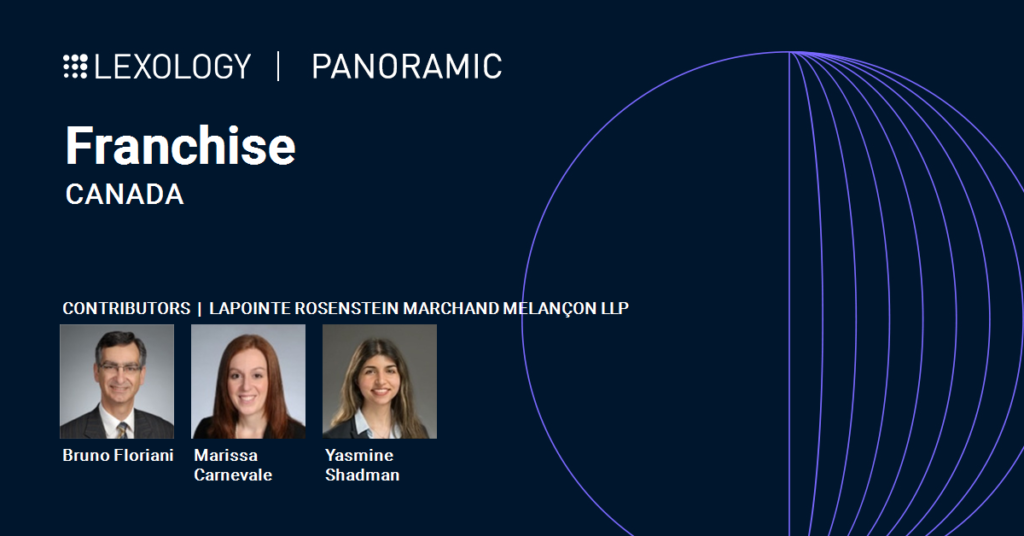
We are proud to highlight the contribution of Me Bruno Floriani, Me Marissa Carnevale, and Me Yasmine Shadman to the 2026 edition of Lexology Panoramic: Franchise, a leading publication that provides an overview of the legal frameworks governing franchising around the world.
This publication serves as a valuable resource for franchisors, franchisees, and legal advisors seeking to better understand the Canadian franchising landscape.
Access the publication here or download the PDF below
 Lexology-Panoramic-CANADA-Franchise-2027.pdf
We are pleased and proud to announce the election of our partner, Me Antoine Leduc, LL.D., Ad. E., GCB.D., as Chair of the Board of Directors of the Fondation du Barreau du Québec.
A member of the Foundation’s Board of Directors since 2025, Me Leduc will bring his experience, leadership, and commitment to the legal community to this new role. As Chair, he will contribute to advancing the Foundation’s strategic priorities and supporting the continued development and sustainability of its mission.
This appointment reflects his longstanding involvement in the legal profession and his commitment to advancing the law, supporting the next generation of legal professionals, and fostering the development of legal knowledge.
The entire team at LRMM extends its warmest congratulations and wishes him every success in his new role.
Read the announcement from the Fondation du Barreau du Québec (please note: this article is available in French only)
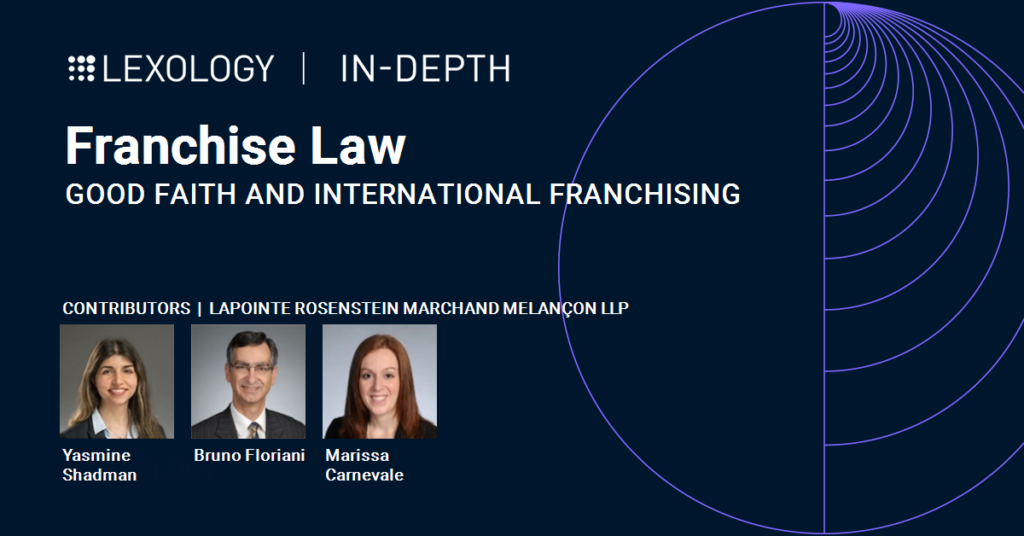
In their chapter, “Good Faith and International Franchising”, Bruno Floriani, Marissa Carnevale and Yasmine Shadman explore how the evolving duty of good faith is shaping franchise relationships across both civil law and common law jurisdictions, while also providing practical guidance for franchisors operating internationally.
A valuable read for anyone involved in franchising and cross-border business.
Discover our new article written on the importance of including all essential terms of a settlement at the time of the offer and/or its acceptance. A look back at the recent Court of Appeal decision in Groupe Capital Alternatif inc. v. Tessier.

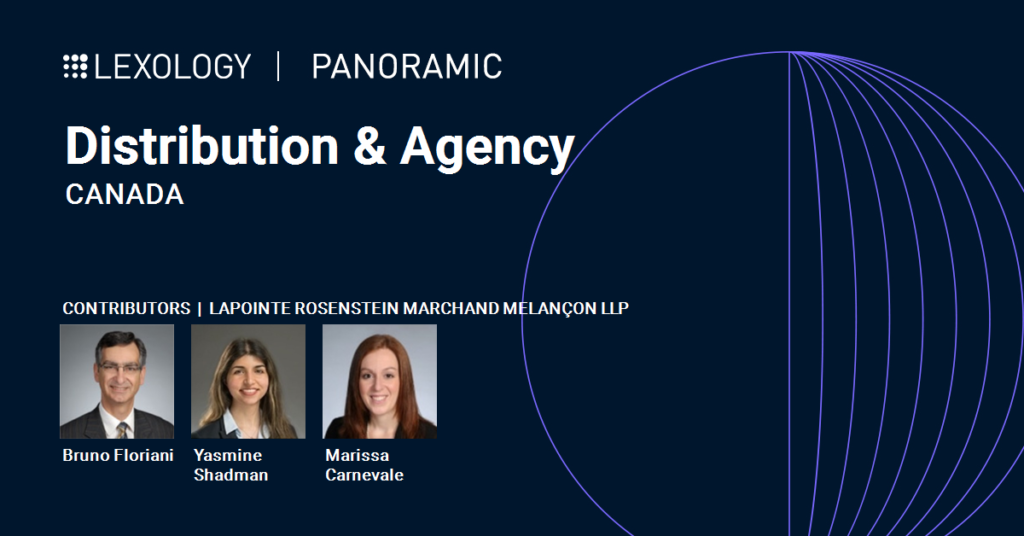
This reference guide provides a clear comparative analysis of key distribution and commercial agency models, including ownership structures, tax considerations for foreign suppliers, and contract termination rights and mechanisms. It also examines the regulation of distribution relationships, covering issues such as confidentiality, competition, pricing, online sales, parallel imports, governing law, dispute resolution mechanisms, and recent trends. Our firm’s authors contributed key insights for Canada.
View the full publication (PDF Download available).